🌍🌿Introduction: Global Perspectives on Environmental Innovation
Welcome back to Beyond Limit Lab and to our ongoing exploration of advanced ecological systems and global agricultural innovations. Today, we step outside conventional narratives to examine a monumental feat of environmental engineering. We will analyze the intricate intersection of technology and biology driving massive ecological restoration efforts across degraded.
Historically, humanity has struggled against the relentless expansion of arid wastelands, with the United Nations estimating that twelve million hectares of land are lost annually (12 million/hectares), threatening global food security. However, innovative methodologies are now reversing these destructive ecological trends through targeted scientific intervention. By deploying sophisticated technological frameworks, nations are successfully transforming barren deserts into highly productive and resilient biological ecosystems.
Our focus centers on China’s unprecedented ecological initiative, universally recognized as the “Great Green Wall”, initiated in nineteen seventy-eight (1978) and spanning over four thousand five hundred kilometers (4500 km). This ambitious project provides crucial data regarding large-scale soil restoration and extreme environment cultivation. It stands as a profound testament to how dedicated scientific research can effectively combat severe planetary climate challenges.
Understanding these advanced methodologies holds immense value for nations confronting similar environmental degradation. The precise integration of digital monitoring, drought-resistant genetics, and specialized substrates offers revolutionary solutions. These carefully engineered agricultural systems directly inform broader conservation strategies while simultaneously maximizing resource efficiency across vulnerable rural territories (Figure 1).

Furthermore, we must recognize how these localized technological breakthroughs transcend international borders to benefit global science. Cooperative partnerships between developing nations foster rapid knowledge exchange and accelerate critical infrastructural improvements. This collaborative scientific approach ensures that proven remediation strategies are quickly adapted for diverse ecological biomes worldwide.
Specifically, analyzing the dynamic synergy between Brazilian and Chinese agricultural sectors reveals immense potential for mutual growth. By evaluating real-world percentages and established scientific literature, we uncover practical pathways toward sustainable development. Today’s discussion bridges these continents, highlighting the indispensable role of advanced biotechnology in preserving our planet.
🌲🚁China’s Technological Innovation in Ecological Restoration
Since nineteen seventy-eight (1978), China has actively pursued massive ecological restoration through the Three-North Shelterbelt Program, globally known as the Great Green Wall. This ambitious initiative strategically integrates advanced technological development with intensive forestry management. Its primary objective involves halting the relentless expansion of the Gobi and Taklamakan deserts.
To combat extreme desertification, the Chinese government and scientific community have successfully planted over sixty-six billion (66 billion) trees across these arid zones. This remarkable milestone relies heavily on innovative planting methodologies and continuous environmental monitoring. Consequently, the country witnessed its national forest coverage expand significantly from twelve percent (12%) in the eighties to an impressive twenty-four percent (24%) today.
Historically, the expanding Gobi Desert was consuming thousands of square kilometers of valuable grassland annually. By deploying smart agricultural tools alongside traditional methods like straw checkerboards, researchers successfully stabilized shifting sand dunes. Recent satellite data confirms a reversal, with desertified land shrinking by approximately two thousand four hundred square kilometers (2400 km2) annually.
Modern technology plays an indispensable role in maintaining this massive ecological barrier. Drones equipped with specialized seed dispensers can quickly cover remote areas, distributing up to two tons (2 tons) of seeds daily and significantly accelerating the reforestation timeline. Meanwhile, advanced solar panel installations help lower ground-level wind speeds, which prevents further sand movement and creates favorable microclimates for young plants (Figure 2).

Research indicates that these artificially planted forests are unexpectedly thriving, displaying leaf area increases sixty-six percent (66%) faster than natural woodlands. Scientists attribute this robust growth to rising atmospheric carbon dioxide levels and targeted irrigation techniques. This phenomenon highlights the complex biological interactions occurring within these newly engineered environments over several decades.
Although the program faces ongoing challenges regarding groundwater depletion and species selection, continuous scientific adaptation ensures long-term viability. By carefully analyzing soil composition and weather patterns, Chinese agricultural experts consistently refine their planting strategies. This persistence transforms barren landscapes into thriving carbon sinks, setting a global standard for ecological restoration.
🌾💧Synergies and Applications for Brazilian Agriculture
The internal evolution of Chinese agriculture directly fuels their remarkable forestry achievements and vice versa. Transitioning from traditional sustenance farming toward sophisticated digital agriculture creates an interconnected ecological network. This continuous synergy guarantees that both expanding forest belts and cultivated farmlands receive optimal resources, dramatically improving national land management efficiency over time.
Agroforestry has emerged as a dominant strategy within these newly restored territories. Farmers actively integrate resilient cash crops beneath the protective canopy of the artificial shelterbelts. This dual-purpose methodology simultaneously generates essential economic income for rural communities while maintaining the vital structural integrity required to prevent aggressive soil erosion and nutrient depletion.
Breakthroughs regarding drought-resistant seed genetics represent another critical component of this ongoing agricultural revolution. Chinese scientists continuously engineer unique plant varieties capable of surviving extreme arid conditions. These specialized plants stabilize loose sand dunes efficiently, laying the necessary biological groundwork before larger, more resource-intensive tree species can be safely introduced into the ecosystem.
Moreover, modern artificial intelligence applications heavily optimize resource distribution across these vast agricultural zones. Automated systems constantly analyze weather forecasting models and real-time soil moisture sensors. Data shows these precise AI interventions can reduce agricultural water consumption by up to fifty percent (50%) while simultaneously increasing overall crop yields by roughly fifteen percent (15%) (Figure 3).
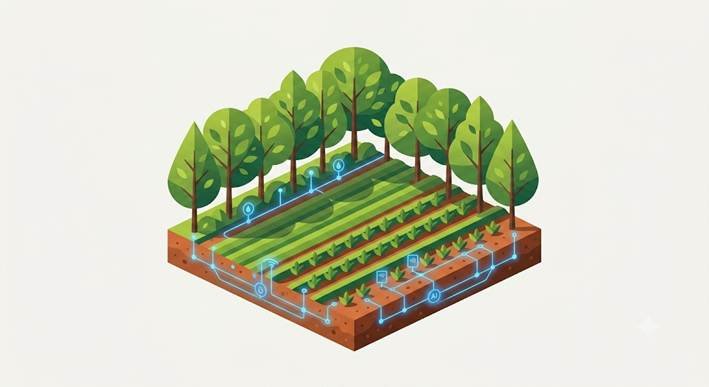
By mastering these intricate conservation techniques, China effectively secures its domestic food supply chain. Robust shelterbelts significantly decrease severe wind velocity, which historically destroyed delicate seasonal harvests. This protective buffering creates stable growing environments, ultimately increasing agricultural yields while concurrently expanding the lush biological footprint of the encompassing national green wall.
The continuous technological evolution within Chinese agriculture clearly proves that environmental conservation and economic productivity are not mutually exclusive. Thoughtful integration of high-tech farming with massive afforestation policies yields undeniably successful results. This holistic approach fundamentally redefines sustainable land management, seamlessly blending ecological preservation with the practical necessities of modern food production.
🤝🛰️Global Scientific Advancement and Sino-Brazilian Collaboration
Globally, these massive ecological engineering milestones provide indispensable scientific data for combating climate change. The successful stabilization of expanding deserts offers a practical blueprint for other vulnerable nations facing similar environmental crises. Researchers worldwide heavily analyze Chinese afforestation statistics, utilizing this comprehensive information to refine international predictive climate models and conservation strategies.
The strategic technological partnership between Brazil and China exemplifies vital international cooperation in earth sciences. Initiated in nineteen eighty-eight (1988), the CBERS space program has jointly developed and launched six specialized remote sensing satellites. These sophisticated orbital tools accurately track both Amazonian deforestation and Asian desertification, delivering crucial real-time imagery essential for immediate ecological restoration (Figure 4).

Sharing advanced precision agriculture technology accelerates sustainable development goals across the broader Global South. With over six million (6 million), high-resolution satellite images distributed globally free of charge, both countries mutually strengthen their respective food security frameworks. This collaborative paradigm dramatically reduces reliance on traditional, environmentally destructive farming practices that previously dominated developing economies.
Furthermore, this bilateral alliance fosters critical academic exchanges between leading agricultural research institutions. Brazilian and Chinese agronomists frequently collaborate on genetic crop modifications specifically designed to withstand extreme temperature fluctuations. Their combined intellectual resources produce innovative agricultural solutions that neither nation could efficiently achieve while operating entirely independently.
These joint technological advancements establish a formidable defense against escalating global ecological catastrophes. Incorporating satellite telemetry with localized drone operations establishes an unprecedented standard for modern ecosystem management. Developing nations can systematically replicate these proven frameworks, effectively converting their own deteriorating landscapes into resilient, biologically diverse agricultural havens.
Ultimately, the Sino-Brazilian technological cooperation represents a beacon of proactive environmental stewardship. By aggressively pursuing scientific innovation and sharing critical infrastructural knowledge, both countries actively secure humanity’s agricultural future. Their ongoing dedication proves that coordinated international efforts remain our most powerful tool for overcoming the monumental challenges of global desertification.
🌅♻️Final Considerations: A Shared Vision for Ecological Restoration
In conclusion, the monumental achievements observed within China’s reforestation programs definitively prove that severe ecological degradation is reversible. By actively merging cutting-edge digital technology with resilient biological systems, researchers have established a formidable defense against advancing desertification. These successful interventions provide a crucial blueprint for global ecological restoration.
The integration of sophisticated artificial intelligence and precision agriculture significantly accelerates these large-scale ecological restoration efforts. As scientific data clearly demonstrates, optimizing resource distribution through automated monitoring fundamentally transforms barren territories into thriving agricultural hubs. This continuous technological evolution remains absolutely essential for ensuring long-term global food security.
For Brazil, adopting these proven international methodologies represents a strategic opportunity to safeguard diverse national biomes. Implementing specialized sensor networks alongside targeted drone seeding can dramatically improve domestic conservation efforts. Embracing such innovative practices allows Brazilian agriculture to maintain high productivity while strictly enforcing responsible environmental stewardship.
Furthermore, the reciprocal relationship between forestry expansion and agricultural development creates deeply self-sustaining ecological networks. Cultivating resilient crops beneath protective green shelterbelts simultaneously boosts local economic prosperity and prevents catastrophic soil erosion. This balanced approach seamlessly harmonizes essential human consumption needs with rigorous planetary preservation standards.
The robust Sino-Brazilian partnership continues to drive vital earth science innovations required for the upcoming decades. Aligning with the United Nations’ mandate to restore one billion hectares (1 billion/hectares), of degraded land by twenty-thirty (2030), joint satellite development and shared biogenetic research dramatically expand our collective capacity to monitor and mitigate environmental disasters. This collaborative paradigm powerfully demonstrates how international scientific unity effectively overcomes isolated geographical limitations.
Ultimately, pushing beyond conventional boundaries remains imperative for researchers dedicated to advancing biological sciences. The insights gathered from transforming extreme arid environments directly inspire future agricultural breakthroughs. By maintaining this rigorous analytical focus, we can continually uncover sustainable solutions that empower humanity to thrive alongside a healthy, restored environment.
📚Reading Recommendation
WENQI, S.; YUHAO, F.; ZHIHENG, W. Ecological restoration programs dominate vegetation greening in China, Science of The Total Environment, Volume 848, 2022, 157729, ISSN 0048-9697, https://doi.org/10.1016/j.scitotenv.2022.157729.
ZHAI, J.; WANG, L.; LIU, Y.; WANG, C.; MAO, X. Assessing the effects of China’s Three-North Shelter Forest Program over 40 years. Science of The Total Environment. Volume 857, Part 1, 2023, 159354, ISSN 0048-9697, https://doi.org/10.1016/j.scitotenv.2022.159354.
HAO, Y.; LIU, X.; XIE, Y.; HUA, L.; LIU, X.; LIANG, B.; WANG, Y.; HUANG, C.; HE, S. A Landscape Restoration Initiative Reverses Desertification with High Spatiotemporal Variability in the Hinterland of Northwest China. Land 2023, 12, 2122. https://doi.org/10.3390/land12122122
DOU, Y. TONG, X.; HORION, S.; FENG, L.; FENSHOLT, R.; SHAO, Q.; TIAN, Feng. The success of ecological engineering projects on vegetation restoration in China strongly depends on climatic conditions, Science of The Total Environment, Volume 915, 2024, 170041, ISSN 0048-9697, https://doi.org/10.1016/j.scitotenv.2024.170041.
ZHANG, J.; ZHANG, Y. Quantitative Assessment of the Impact of the Three-North Shelter Forest Program on Vegetation Net Primary Productivity over the Past Two Decades and Its Environmental Benefits in China. Sustainability 2024, 16, 3656. https://doi.org/10.3390/su16093656.
LI, C.; ZHANG, S.; CUI, M.; WAN, J.; RAO, T.; LI, W.; WANG, X. Improved Vegetation Ecological Quality of the Three-North Shelterbelt Project Region of China during 2000–2020 as Evidenced from Multiple Remotely Sensed Indicators. Remote Sens. 2022, 14, 5708. https://doi.org/10.3390/rs14225708.
WANG, Q.; LIU, H.; LIANG, B.; SHI, L.; WU, L.; CAO, J. Will large-scale forestation lead to a soil water deficit crisis in China’s drylands? Science Bulletin, Volume 69, Issue 10, 2024, Pages 1506-1514, ISSN 2095-9273, https://doi.org/10.1016/j.scib.2024.03.005.
LIU, Y.; LI, H.; WU, M.; WANG, A.; WU, J.; GUAN, D. Estimating the Legacy Effect of Post-Cutting Shelterbelt on Crop Yield Using Google Earth and Sentinel-2 Data. Remote Sens. 2022, 14, 5005. https://doi.org/10.3390/rs14195005.
TIANJIAO, F.; MINGXIN, J.; YIXIN, W.; DONG, W.; ZHIMING, X.; HUIJIE, X.; JUNRAN, L. Impact of farmland shelterbelt patterns on soil properties, nutrient storage, and ecosystem functions in desert oasis ecotones of Hetao irrigated areas, China. CATENA, Volume 225, 2023, 107010, ISSN 0341-8162, https://doi.org/10.1016/j.catena.2023.107010.
CHE, C; YIN, Q; LI, Q.; LI, S.; ZHENG, H.; GENG, X.; ZHANG, S. 2024. Impact of rural digital economy development on agricultural eco-efficiency: evidence from mainland China. Front. Energy Effic. 2:1292248. https://doi.org/10.3389/fenef.2024.1292248.
KARN, S.; KOTECHA, R.; PANDEY, R. K. Towards Sustainable Farming: Leveraging AIoT for Precision Water Management and Crop Yield Optimization. Procedia Computer Science, Volume 233, 2024, Pages 772-781, ISSN 1877-0509, https://doi.org/10.1016/j.procs.2024.03.266.
OLDONI, L. V.; SANCHES, I. D. A.; PICOLI, M. C.A.; PRUDENTE, V. H. R.; ADAMI, M. Geometric accuracy assessment and a framework for automatic sub-pixel registration of WFI images from CBERS-4, CBERS-4A, and Amazonia-1 satellites over Brazil. Remote Sensing Applications: Society and Environment, Volume 28, 2022, 100844, ISSN 2352-9385, https://doi.org/10.1016/j.rsase.2022.100844.
FERRO, P.D.; MATAVELI, G.; ARCANJO, J. S.; Dutra, D. J.; MEDEIROS, T. P.; Shimabukuro, Y. E.; PESSOA, A. C. M.; OLIVEIRA, G.; ANDERSON, L. O. Regional-Scale Assessment of Burn Scar Mapping in Southwestern Amazonia Using Burned Area Products and CBERS/WFI Data Cubes. Fire 2024, 7, 67. https://doi.org/10.3390/fire7030067.
MARTINEZ, J. A. C.; Gilson, A.; COSTA, O. P.; MESSIAS, C. G.; SOLER, L. S.; ALMEIDA, C. A.; FEITOSA, R. Q. Enhancing deforestation monitoring in the Brazilian Amazon: A semi-automatic approach leveraging uncertainty estimation. ISPRS Journal of Photogrammetry and Remote Sensing. Volume 210. 2024. Pages 110-127, ISSN 0924-2716, https://doi.org/10.1016/j.isprsjprs.2024.03.004.
LI, W.; DONG, W.; ZHANG, X.; ZHANG, J. A New Remote Sensing Service Mode for Agricultural Production and Management Based on Satellite–Air–Ground Spatiotemporal Monitoring. Agriculture 2023, 13, 2063. https://doi.org/10.3390/agriculture13112063.
Quer receber os próximos artigos do Beyond Limit Lab antes de qualquer um?
Toda semana, o Beyond Limit Lab explora as fronteiras entre ciência, tecnologia e o desconhecido. Entre para a newsletter e acompanhe as descobertas que podem redefinir o futuro da humanidade.
Explora mais temas como este na nossa secção de [https://beyondlimitlab.com/articles/]
→ [Assinar a Newsletter do Beyond Limit Lab]: