1. Introduction
Each space mission incorporates a wide range of scientific instruments, advanced sensors, and carefully planned experiments. However, its main product is not embedded hardware, but rather the continuous generation of large-scale data. This data has a high degree of complexity, diversity, and analytical value, constituting the basis for scientific discoveries and subsequent technological applications.
In the contemporary context of Artificial Intelligence, data plays a central role as a fundamental input for the development of advanced computational models. More than simple records, they enable machine learning, pattern recognition, and automated decision-making processes. In this way, data becomes the main driver of technological innovation in multiple strategic sectors.
The relationship between space exploration and Artificial Intelligence (AI) is characterized as co-evolutionary, since both develop interdependently. Space missions impose extreme challenges that demand sophisticated computational solutions, while providing tools capable of dealing with uncertainties, operational autonomy, and complex data analysis, significantly expanding the capacity for scientific exploration (Figure 1).
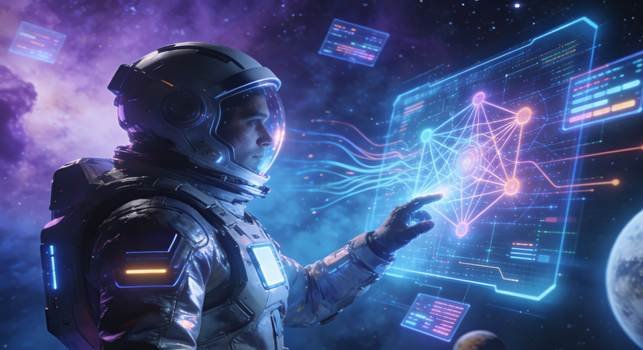
Figure 1: Dialogue with the Infinite: The fusion of human courage with synthetic intelligence to unlock the secrets of the universe. Source: (The Author, 2025).
Therefore, in the institutional conjuncture of the Beyond Limit Lab, this convergence between space exploration and Artificial Intelligence (AI) is understood as one of the central vectors of contemporary technological transformation. Such integration not only redefines the limits of scientific inquiry, but also lays the foundations for a new era of innovation, characterized by the synergy between human and computational systems in extreme environments.
2. Artificial Intelligence: The Operational Awareness of Missions
Space missions extend beyond Earth orbit, direct human control becomes progressively limited due to physical constraints inherent in interplanetary communication. Latency in signals between Earth and other celestial bodies, such as Mars, can reach tens of minutes, making real-time responses unfeasible and requiring systems capable of operating independently.
In this scenario, the need for autonomous decision-making becomes a critical operational requirement. During communication intervals, embedded systems must be able to interpret environmental data, assess risks, and perform actions without immediate human intervention. This condition imposes the development of robust computational architectures, capable of dealing with uncertainties and variability in highly dynamic and hostile environments.
In this way, Artificial Intelligence (AI) transcends its traditional role as an auxiliary tool and starts to act as a true embedded cognitive infrastructure. Its function is not limited to data processing, but includes the ability to analyze contextually, adaptive learning, and decision-making in complex scenarios, significantly expanding the operational autonomy of contemporary space missions.
The Perseverance rover (Figure 2), developed by NASA, exemplifies this transition by incorporating advanced autonomous navigation systems. These systems allow for real-time interpretation of the Martian environment, selection of relevant scientific targets, and optimization of trajectories, reducing reliance on commands sent from Earth and increasing the mission’s scientific efficiency.
In a convergent way, initiatives conducted by the European Space Agency and the China National Space Administration demonstrate the growing adoption of intelligent systems capable of detecting anomalies, adapting to unforeseen conditions, and performing operational corrections autonomously, reinforcing the trend of decentralization of human control in advanced space missions.
That said, contemporary space exploration is no longer exclusively conducted by direct human commands and starts to depend on systems capable of interpreting, learning and acting independently. The integration between human capabilities and computational intelligence redefines the operational paradigm of missions, establishing a new stage in the evolution of scientific and technological exploration of space.
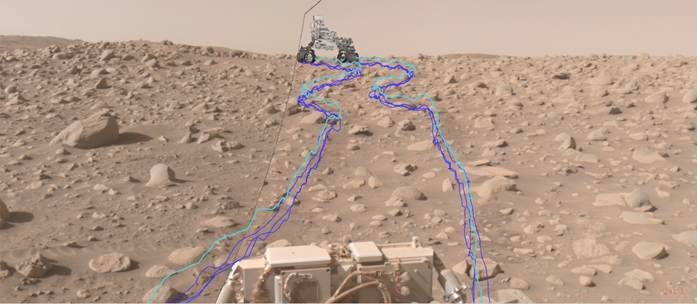
Figure 2: Autonomous Navigation on Mars: The Path of the Rover Perseverance through Rock Field under the Command of AutoNav. Source: (NASA, 2024).
3. Data from Space: The New Gold of Global Intelligence
Currently, Earth observation satellites operate with levels of spatial, temporal and spectral resolution significantly higher than those available in previous decades. These systems allow the continuous acquisition of data on environmental, climatic and anthropogenic variables, consolidating a global monitoring infrastructure that enables detailed and systematic analysis of the Earth’s dynamics at multiple scales.
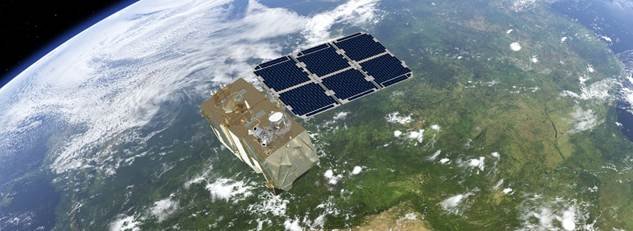
Figure 3: Sentinel-2 monitoring changes in the landscape. Source: (ESA, 2015).
As a result, a continuous flow of data on a planetary scale is established, characterized by high volume, velocity, and variety. This scenario is inserted in the context of big data, in which storage capacity exceeds the human capacity for direct interpretation. Thus, it is essential to use advanced computational tools to transform raw data into relevant and actionable information.
Without the support of Artificial Intelligence (AI) techniques, much of this data would remain underutilized, due to the inherent complexity of its structure and the magnitude of its scale. Traditional analysis methods are not sufficient to identify patterns, correlations, and anomalies in a timely manner, limiting the potential for applying this data in scientific and operational contexts.
The application of machine learning and deep learning algorithms allows the extraction of strategic information from these large volumes of data. Among the main applications are real-time climate monitoring, the prediction of extreme events, the detection of illegal activities such as deforestation and irregular fishing, and the optimization of agricultural systems on a global scale.
ISRO exemplifies the practical use of these approaches by integrating Artificial Intelligence (AI) models in the analysis of data from its remote sensing satellites. These systems have been applied in the monitoring of land use and the management of natural resources, directly contributing to the formulation of large-scale public policies.
Consequently, there is the consolidation of a new technological paradigm, in which the management of the Earth is mediated by orbital systems and algorithmic intelligence. The integration between space observation and Artificial Intelligence (AI) redefines human monitoring and decision-making capabilities, establishing a more predictive, automated, and evidence-based approach.
4. Space Medicine: Reprogramming the Human Body
Space exploration poses challenges not only to technological systems, but also to human physiology, exposing the organism to conditions significantly different from those found on Earth. Microgravity, in particular, alters fundamental biological processes, making the space environment a unique context for the study of physiological adaptations and the limits of homeostasis in extreme and prolonged conditions.
In microgravity environments, the human body undergoes rapid and measurable changes in multiple systems. An accelerated reduction in bone mineral density, degradation of skeletal muscle mass, and redistribution of body fluids are observed. In addition, adaptations occur in the cardiovascular system, including changes in blood volume and blood pressure regulation, evidencing human physiological plasticity.
These changes, initially interpreted as operational risks for long-duration missions, have come to be understood as relevant scientific opportunities. The study of these adaptations provides unique experimental models to investigate degenerative processes, aging, and physiological responses to extreme conditions, contributing to the advancement of biomedical knowledge in both space and terrestrial contexts.
Research conducted in a space environment has directly contributed to the development of innovative therapeutic approaches. Studies on bone loss in microgravity, for example, offer valuable insights for the treatment of osteoporosis. Similarly, investigations on body fluid redistribution broaden the understanding of neurological and cardiovascular disorders associated with intracranial pressure and hemodynamic regulation.
Advanced projects, such as the MELiSSA system (Figure 4), developed by the European Space Agency, expand these applications by integrating Artificial Intelligence (AI) into the management of closed ecosystems. These systems aim to efficiently recycle essential resources such as water, oxygen, and nutrients, establishing sustainable life support models that can be adapted for applications in terrestrial environments.
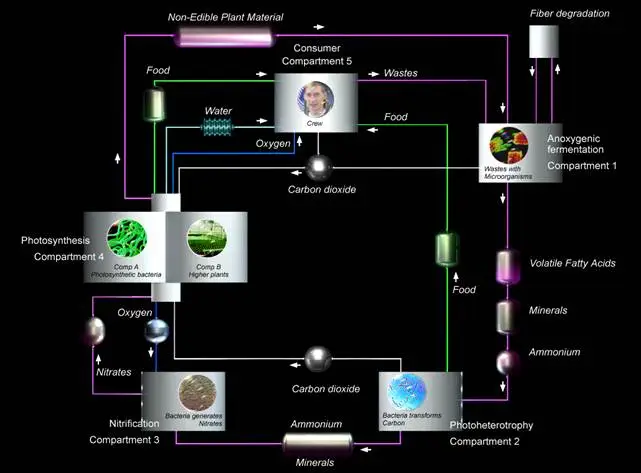
Figure 4: Diagram of Project Melissa, representing an alternative microecological life support system. Source: (ESA, 2009).
In view of this, space medicine transcends its initial function of supporting astronauts, consolidating itself as a strategic field for biomedical innovation. The knowledge generated from human adaptation to space has the potential to redefine medical practices on Earth, contributing to the development of more effective, sustainable solutions adapted to contemporary global health challenges.
5. Space as a Mirror of Humanity
The phenomenon known as the Overview Effect describes a cognitive experience reported by astronauts when observing the Earth from space. It is a profound perceptual change, characterized by the reconfiguration of the understanding of borders, identity and global interdependence, and is often associated with an expansion of environmental awareness and the perception of the fragility of the planet.
Astronauts who experience this phenomenon report a significant transformation in the way they interpret the political and geographical organization of the Earth. National boundaries become visually irrelevant, while aspects such as the finiteness of natural resources and the vulnerability of ecosystems become more evident, promoting an integrated and systemic perception of the planet as a single interconnected organism.
Although the Overview Effect is often described in subjective terms, its impact transcends individual experience, influencing institutional discourses, public policies, and global initiatives. The internalization of this perspective can contribute to the strengthening of agendas focused on sustainability, international cooperation, and global governance, reflecting the importance of a broader view of contemporary planetary challenges.
The International Space Station (Figure 5) is a concrete example of the materialization of this collaborative perspective, bringing together different nations in a continuous scientific effort. Operated jointly by multiple space agencies, the ISS demonstrates the feasibility of sustained international cooperation, even in complex and sometimes adverse geopolitical contexts over time.
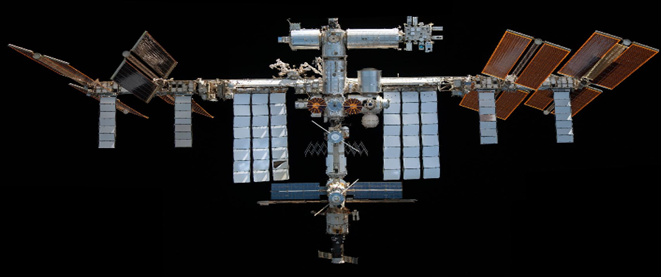
Figure 5: The International Space Station was photographed from SpaceX’s Dragon Endeavour spacecraft. Source: (Pesquet, 2021).
At the same time, the Tiangong space station (Figure 6), developed by the China National Space Administration, stands out as one of the most advanced projects today in terms of operational autonomy and modular engineering in orbit. Its technological architecture and scalability reflect a high degree of maturity in the Chinese space program, consolidating China as a central player in contemporary space exploration.
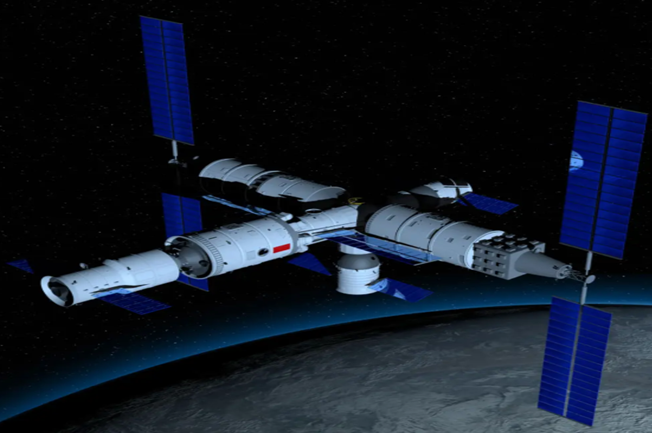
Figure 6: 3D representation of the Chinese Space Station (Tiangong). Source: (Miranda, 2019).
Unlike multilateral initiatives, Tiangong represents the ability to independently develop complex orbital infrastructure, integrating advanced life support systems, scientific experimentation, and long-duration operations. This model demonstrates not only technological mastery, but also strategic efficiency in the implementation of continuous missions, with increasing impact on scientific production and global space innovation.
Therefore, it is denoted that competition and cooperation are not mutually exclusive dynamics, but rather complementary in the advancement of space exploration. The coexistence of these models drives scientific and technological progress, promoting continuous innovation and expanding humanity’s collective capacity to explore, understand, and interact with the space environment in a strategic and sustainable way.
6. The Next Leap: Missions Created by Artificial Intelligence
There is currently a significant transition in the role of Artificial Intelligence (AI) in the context of space exploration, from a decision support tool to an active agent in mission planning itself. AI-based systems have been employed in the design of operational structures and strategies, introducing innovative approaches that go beyond the limits of traditional design conducted exclusively by human engineers.
At NASA’s Jet Propulsion Laboratory, generative design algorithms have been used to develop highly optimized structural components. These systems exploit complex solution spaces, producing efficient geometries under multiple simultaneous criteria, such as mechanical strength, mass reduction, and functional performance, often resulting in configurations that would not be intuitively designed by traditional engineering processes.
The Artemis program exemplifies the growing incorporation of Artificial Intelligence (AI) at different operational levels, including habitat planning, automated resource exploitation, and the execution of autonomous activities in extreme environments. Such applications show a paradigmatic shift, in which AI becomes a structuring element for the feasibility of long-duration missions beyond Earth.
At the same time, the James Webb Space Telescope (Figure 7) generates volumes of highly complex scientific data, whose interpretation requires the intensive use of advanced machine learning techniques. These methods allow the identification of patterns, structures, and phenomena that would not be easily detectable by direct human analysis, significantly expanding the reach of contemporary astronomical discoveries.
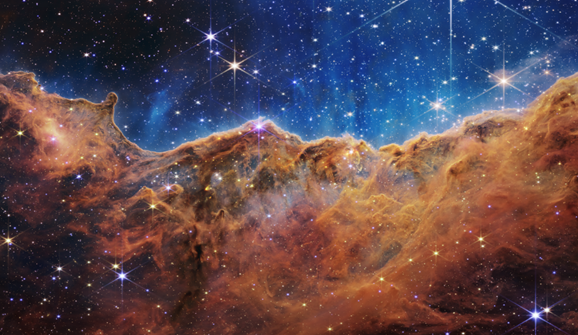
Figure 7: First images of the invisible Universe captured by the Webb Telescope. Source: (NASA, 2022).
Finally, the integration between Artificial Intelligence (AI) and space exploration points to a structural transformation in the way scientific knowledge is produced. It is not only about expanding the human capacity for exploration, but about developing systems capable of interpreting and generating knowledge autonomously, redefining the limits of scientific investigation in the space environment.
7. Conclusion
The analysis of the interaction between space exploration and Artificial Intelligence (AI) shows that both do not constitute independent trajectories, but rather interconnected processes that evolve synergistically. While the space environment imposes extreme challenges that stimulate technological advancement, AI offers the necessary means to deal with complexity, uncertainty, and autonomy, consolidating itself as a central element in this evolutionary process.
Within the scope of the Beyond Limit Lab, this convergence is interpreted as a strategic vector for understanding contemporary technological transformations. Scientific advancement is not limited to the generation of new knowledge, but involves the creation of systems capable of expanding the human capacity for discovery, establishing a new dynamic in the production and application of knowledge.
The integration between human capabilities, intelligent systems, and extreme environments, such as space, configures a new paradigm for scientific and technological development. This convergence redefines not only the operational limits of space exploration, but also the epistemological foundations of science, by introducing non-human agents into the process of generating, interpreting, and validating knowledge.
In this way, space exploration, associated with the advancement of Artificial Intelligence (AI), lays the foundations for a new stage in the trajectory of humanity. This stage is characterized by the continuous expansion of the frontiers of the possible, supported by systems that are increasingly autonomous, integrated, and capable of operating on scales and contexts previously inaccessible to traditional scientific investigation.
8. Reading Recommendation
ALMEIDA, B; et al. Satellite-based Machine Learning modelling of Ecosystem Services indicators: A review and meta-analysis. 2024. Vol. 165. Available in: https://doi.org/10.1016/j.apgeog.2024.103249. Access in: 25/04/2026.
BRIDGES, K. E. Human and artificial intelligence considerations for long duration space travel – A human factors perspective. 2023. Vol. 10. Issue. 4. Pages 433-438. Science direct. Available in: https://doi.org/10.1016/j.jsse.2023.10.003. Access in: 25/04/2026.
EUROPEAN SPACE AGENCY. ESA. Melissa Project. 2009. Available in: https://www.esa.int/ESA_Multimedia/Images/2009/06/Melissa_Project?. Access in: 24/04/2026.
EUROPEAN SPACE AGENCY. ESA. Sentinel-2: monitoring changing lands. 2015.ESA/ATG medialab. Available in: https://www.esa.int/ESA_Multimedia/Images/2015/06/Sentinel-2_monitoring_changing_lands. Access in: 24/04/2026.
FISHER, A. PINOL, N. BETZ, L. NASA Reveals Webb Telescope’s First Images of Unseen Universe. 2022. National Aeronautics and Space Administration. Headquarters, Washington. Available in: https://www.nasa.gov/news-release/nasa-reveals-webb-telescopes-first-images-of-unseen-universe/. Access in: 24/04/2026.
GONG J, ZHAO Z, NIU X, JI Y, SUN H, SHEN Y, CHEN B AND WU B. AI reshaping life sciences: intelligent transformation, application challenges, and future convergence in neuroscience, biology, and medicine. 2025. Vol. 7. Available in: https://doi.org/10.3389/fdgth.2025.1666415. Access in: 25/04/2026.
HABIB, T.M.A. Artificial intelligence for spacecraft guidance, navigation, and control: a state-of-the-art. 2022. AS 5, 503–521. Available in: https://doi.org/10.1007/s42401-022-00152-y. Access in: 25/04/2026.
MIRANDA, A. 3D image of the Chinese space station (Tiangong). 2019. Ecuador. Available in: https://www.istockphoto.com/. Access in: 24/04/2026.
NATIONAL AERONAUTICS AND SPACE ADMINISTRATION. NASA. Perseverance’s AutoNav Leads the Way. 2023. NASA/JPL-Caltech. Available in: https://science.nasa.gov/resource/perseverances-autonav-leads-the-way/. Access in: 24/04/2026.
PESQUET, T. NATIONAL AERONAUTICS AND SPACE ADMINISTRATION. NASA. Space Station Gallery. 2021. This mosaic depicts the International Space Station pictured from the SpaceX Crew Dragon Endeavour during a fly around of the orbiting lab that took place following its undocking from the Harmony module’s space-facing. Available in: https://www.nasa.gov/international-space-station/space-station-gallery/. Access in: 24/04/2026.
NATURE. The dynamic frontier of artificial intelligence. Nat. Mater. 25, 161 (2026). Available in: https://doi.org/10.1038/s41563-026-02504-x. Access in: 25/04/2026.
PODUVAL B; et al. AI-ready data in space science and solar physics: problems, mitigation and action plan. 2023. Vol. 10. Available in: https://www.frontiersin.org/journals/astronomy-and-space-sciences/articles/10.3389/fspas.2023.1203598/. Access in: 24/04/2026.
RICHARDS CE, CERNEV T, TZACHOR A, ZILGALVIS G AND KALEAGASI B. Safely advancing a spacefaring humanity with artificial intelligence. 2023. Front. Space Technol. Vol. 4. Available in: https://doi.org/10.3389/frspt.2023.1199547. Access in: 25/04/2026.
WANG, P.; BAYRAM, B.; SERTEL, E. A comprehensive review on deep learning based remote sensing image super-resolution methods. 2022. Vol. 232. Earth-Science Reviews. Science Direct. Available in: https://doi.org/10.1016/j.earscirev.2022.104110. Access in: 25/04/2026.
WANG, Z. Space AI: Leveraging Artificial Intelligence for Space to Improve Life on Earth. 2026. Cornell University. Available in: https://arxiv.org/abs/2512.22399?. Access in: 25/04/2026.