🧩Introduction
The linear progression of human evolution is deeply ingrained in textbooks. However, this simplified visual narrative dominated our understanding of paleoanthropology, presenting an inaccurate depiction of our origins. Today, advanced genomic sequencing reveals that unknown human ancestors fundamentally shaped our complex biological development before mysteriously vanishing from the fossil record.
For generations, we have been taught to view our ancestral history as a simple, straightforward tree characterized by neat, predictable evolutionary branches. However, advanced genomic sequencing now proves that this orderly model fails to capture the immense genetic diversity and frequent interbreeding that actually defined the prehistoric hominin landscape globally.
The true reality of our biological past is far messier, much more complex, and infinitely more fascinating than a straight ladder of steady progress. Rather than an isolated journey of a single dominant species, human history is defined by constant interaction, genetic exchange, and adaptation alongside numerous parallel hominin lineages.
Imagine human evolution not as a singular path, but as a tangled, chaotic web of intersecting species, widespread continental migrations, and hidden encounters. This intricate network of genetic exchange, known as introgression, allowed various human populations to share advantageous biological traits, fundamentally shaping the resilient genetic makeup we carry today.
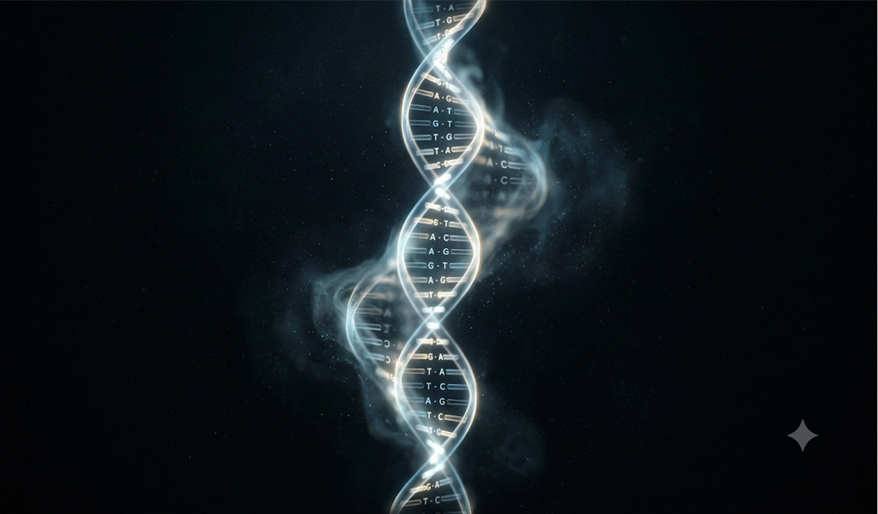
For decades, paleoanthropologists relied entirely on physical fossils—skulls, femurs, and teeth painstakingly dug from the dirt—to piece together this ancient puzzle. The entire scientific framework of human origins was strictly limited to environments where geographical and chemical conditions perfectly aligned to preserve bone fragments over millions of grueling years.
But what happens when the earth outright refuses to yield bones? What happens when an entire ancient species lives, thrives, and eventually vanishes without leaving a single physical trace behind? Humid climates and acidic soils routinely destroy skeletal remains, creating massive blind spots in the traditional fossil record of human evolution.
This is exactly where the modern mysteries of science come to life, fundamentally shifting the traditional archaeological dig from dusty soils to the microscopic universe of our own cells. Today, scientists excavate biological information directly from human DNA, uncovering hidden evolutionary chapters that were previously lost to the ravages of time.
Recently, an astonishing genomic revelation has completely shaken the scientific community. Our DNA is actively haunted by the distinct genetic signatures of unknown human ancestors who left no physical remains. This groundbreaking discovery proves that the greatest biological secrets of history are currently locked inside you, waiting to be fully decoded.
👻Who Are These Unknown Human Ancestors?
Up until very recently, the global scientific consensus was entirely comfortable with a few well-documented ancient interbreeding events, specifically those involving Neanderthals and Denisovans. Researchers successfully extracted genetic material from preserved skeletal remains, proving unequivocally that early modern humans exchanged genetic information with these famous, closely related evolutionary cousins.
We clearly knew that as modern humans migrated out of the African continent, they directly encountered and mingled with these close evolutionary cousins. By absorbing distinct fragments of their DNA through widespread interbreeding, our ancestors gained crucial biological advantages, such as enhanced immune responses and better adaptations to freezing climates.
However, recent technological breakthroughs published in top-tier scientific journals have completely shattered this relatively simple evolutionary narrative. By utilizing vastly improved genomic sequencing techniques and sophisticated machine learning algorithms, researchers discovered hidden layers of genetic complexity that traditional archaeological methods could never have identified or explained through fossils alone.
Advanced genetic mapping by UCLA researchers, published in Science Advances, revealed that some modern West African populations carry between 2% and 19% of DNA from unknown human ancestors. This mysterious genetic material does not match Neanderthal or Denisovan genomes, confirming the existence of a parallel human population that is now extinct.
Globally, most non-African modern humans already carry around 1% to 2% Neanderthal DNA. Furthermore, certain Oceanian populations possess up to 6% Denisovan ancestry. However, this newly discovered ghost lineage separated from our direct ancestral line roughly 800,000 years ago, representing a completely separate evolutionary branch before eventually interbreeding with us.
The evolutionary rabbit hole goes even deeper. A 2020 study using the ARGweaver-D algorithm found that exactly 1% of the Denisovan genome comes from an even older, super-archaic genetic ghost. This astonishing secondary discovery proves ancient interbreeding was a common survival strategy, ultimately influencing our modern human genetic blueprint significantly.
This mysterious “super-archaic” hominin lineage diverged a staggering 1.8 million years ago, representing a truly ancient branch of humanity. They somehow injected their distinct genetic material into the Denisovan population, who subsequently passed a fraction of that primordial biological code down to modern humans during later overlapping migration periods.
These two completely invisible ancestors walked the Earth, hunted for resources, and survived in an incredibly harsh prehistoric world. Yet, they remain entirely faceless today, known to modern science only as specific statistical anomalies embedded within massive genomic datasets, proving that life leaves digital footprints even when physical bodies disappear.
💻The Tool: Investigating Unknown Human Ancestors Without Fossils
For a scientific platform exactly like Beyond Limit Lab, the fascinating intersection between deep biological mysteries and cutting-edge analytical technology is where the true magic happens. We love exploring how modern technological innovations continuously force us to completely rethink and rewrite the established historical paradigms of our own ancient existence.
You might logically and scientifically wonder: if we currently have no bones, no skulls, and absolutely no physical DNA samples directly extracted from these ancient beings, how can we possibly know they existed? The profound lack of physical artifacts seems to present an insurmountable barrier to traditional anthropological research methods.
The definitive answer lies entirely in the incredible, world-changing power of modern computational modeling, sophisticated artificial intelligence, and highly advanced mathematical algorithms. These robust digital tools possess the unique capability to analyze biological information on a scale that human researchers could never manually achieve using standard laboratory sequencing techniques alone.
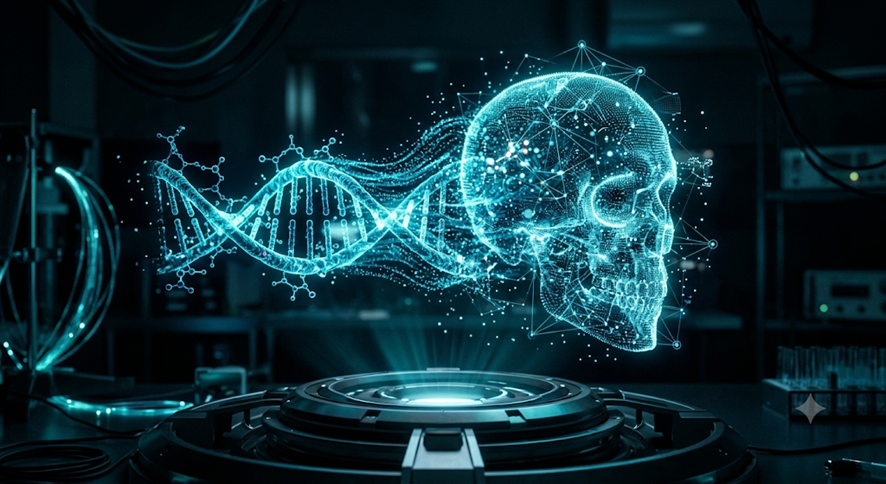
Innovative researchers have successfully developed highly sophisticated computational approaches explicitly designed to act as digital archaeologists in the modern scientific era. These powerful algorithms can meticulously excavate the human genome, searching for microscopic evolutionary clues that remain deeply buried within the complex molecular structure of our living DNA strands.
Instead of painstakingly sifting through physical layers of sedimentary rock and ancient dirt, these automated digital tools quickly sift through the petabytes of complex genetic data contained within the modern human genome. They cross-reference millions of distinct genetic markers to identify profound evolutionary inconsistencies hidden in plain sight today.
By extensively comparing the genomes of thousands of living humans and mathematically mapping complex genealogical relationships, these powerful algorithms can easily spot the distinct genetic sequences of unknown human ancestors. Furthermore, they can accurately confirm these unusual sequences definitely do not match any known Neanderthal or Denisovan biological profiles today.
These unusual, alien genetic sequences stand out dramatically like clear digital footprints left behind in fresh, untouched snow. This specific statistical isolation allows specialized scientists to partially reconstruct the foundational genome of a vanished hominin species that modern researchers have never physically seen or excavated from the natural earth.
It is a truly profound testament to how modern computational biology and advanced technological tools are actively redefining our fundamental understanding of history. This proves unequivocally that we can successfully illuminate the darkest, most ancient corners of human evolutionary existence right from the glowing screen of a modern laboratory computer.
💡Final Considerations
The groundbreaking discovery of unknown human ancestors fundamentally changes the way we perceive ourselves and our biological place in the natural world. We are certainly not the pure, isolated product of a single evolutionary line, but rather a beautifully complex genetic mosaic composed of survivors, interlopers, and forgotten ancient species.
Our physical bodies operate as living, breathing archives of an incredibly ancient world that we are only just beginning to scientifically understand. Every single cell carries the permanent biological echoes of extinct hominins who battled fierce prehistoric climates, bravely traversed uncharted continents, and ultimately wove their DNA into ours forever.
What is truly fascinating is that this mysterious “alien” DNA is absolutely not just biological junk left over from random ancient encounters. Rigorous modern studies strongly indicate that many of these archaic genetic insertions remain highly active and incredibly functional within our biological systems today, fundamentally shaping our daily physiological responses.
These ancient genetic sequences are highly functional. For example, research demonstrates that a specific Denisovan gene variant, EPAS1, is present in 87% of modern Tibetans, granting them the unique ability to survive at extreme altitudes. These archaic genes provide modern humans with a robust evolutionary toolkit to combat harsh environments.
In a very real and tangible sense, these faceless ancestors generously gave us the critical biological tools we desperately needed to conquer the globe and successfully survive against impossible ecological odds. They essentially gifted us the foundational genetic resilience required to build vast civilizations across every extreme climate on Earth.
Their physical bodies may have quietly turned to dust millions of years ago, completely vanishing from the geological record, but their profound biological legacy remains incredibly alive and well. It is actively beating inside the heart of every single modern person currently walking the surface of the Earth today.
As we relentlessly continue to push the absolute boundaries of genomic science and computational technology, who truly knows what other ancient phantoms are patiently waiting to be discovered hidden away in our biological code? The human genome remains a vast, uncharted galaxy of historical mysteries waiting for proper scientific exploration.
Here at Beyond Limit Lab (https://beyondlimitlab.com/), we promise to keep meticulously turning over these microscopic genetic stones. We will continuously explore the biological unknown, decode the complex digital footprints of our unknown human ancestors, and consistently bring the greatest, most profound mysteries of the scientific universe directly to your eager screens.
📚Reading Recommendation
Durvasula, A., & Sankararaman, S. (2020). Recovering signals of ghost archaic introgression in African populations. Science Advances, 6(7), eaax5097. https://www.science.org/doi/10.1126/sciadv.aax5097
Green, R. E., et al. (2010). A Draft Sequence of the Neandertal Genome. Science, 328(5979), 710-722. https://www.science.org/doi/10.1126/science.1188021
Hubisz, M. J., Williams, A. L., & Siepel, A. (2020). Mapping gene flow between ancient hominins through demography-aware inference of the ancestral recombination graph. PLOS Genetics, 16(8), e1008895. https://journals.plos.org/plosgenetics/article?id=10.1371/journal.pgen.1008895
Huerta-Sánchez, E., et al. (2014). Altitude adaptation in Tibetans caused by introgression of Denisovan-like DNA. Nature, 512(7513), 194-197. https://doi.org/10.1038/nature13408
Jiao Ma, Hervé Bocherens, Haowen Tong, Shuwen Pei, Xiujie Wu, Wu Liu. Paleoenvironments of the late Middle Pleistocene Hualongdong, east-central China and their implications for the hominin evolution in eastern Asia. Quaternary Science Reviews, Volume 373, 2026,109746, ISSN 0277-3791. https://www.sciencedirect.com/science/article/pii/S0277379125005669
Racimo, F., Marnetto, D., & Huerta-Sánchez, E. (2017). Signatures of Archaic Adaptive Introgression in Present-Day Human Populations. Molecular Biology and Evolution, 34(2), 296-317. https://doi.org/10.1093/molbev/msw216
Reich, D., Green, R., Kircher, M. et al. Genetic history of an archaic hominin group from Denisova Cave in Siberia. Nature 468, 1053–1060 (2010). https://doi.org/10.1038/nature09710
Slon, V., et al. (2017). Neandertal and Denisovan DNA from Pleistocene sediments. Science, 356(6338), 605-608. https://www.science.org/doi/10.1126/science.aam9695
Wangshan Zheng, Yiming Wang, Ying Li, Caijuan Bai, Yanan Yang, Yongbo Guo, Ouzhuluobu, Chaoying Cui, Xuebin Qi. Genetic adaptations of innate immune genes in Tibetans: Insights into protection against pulmonary hypertension and hepatitis B virus infection in high-altitude environments. Genomics.Volume 117, Issue 5, 2025,111079, ISSN 0888-754. https://www.sciencedirect.com/science/article/pii/S0888754325000953
Quer receber os próximos artigos do Beyond Limit Lab antes de qualquer um?
Toda semana, o Beyond Limit Lab explora as fronteiras entre ciência, tecnologia e o desconhecido. Entre para a newsletter e acompanhe as descobertas que podem redefinir o futuro da humanidade.
Explora mais temas como este na nossa secção de [https://beyondlimitlab.com/articles/]
→ [Assinar a Newsletter do Beyond Limit Lab]: